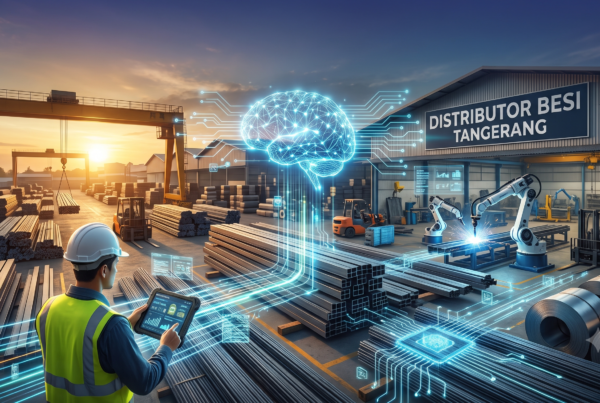

The digital landscape of Southeast Asia is no longer being drawn by software developers; it is being engineered by grid operators.
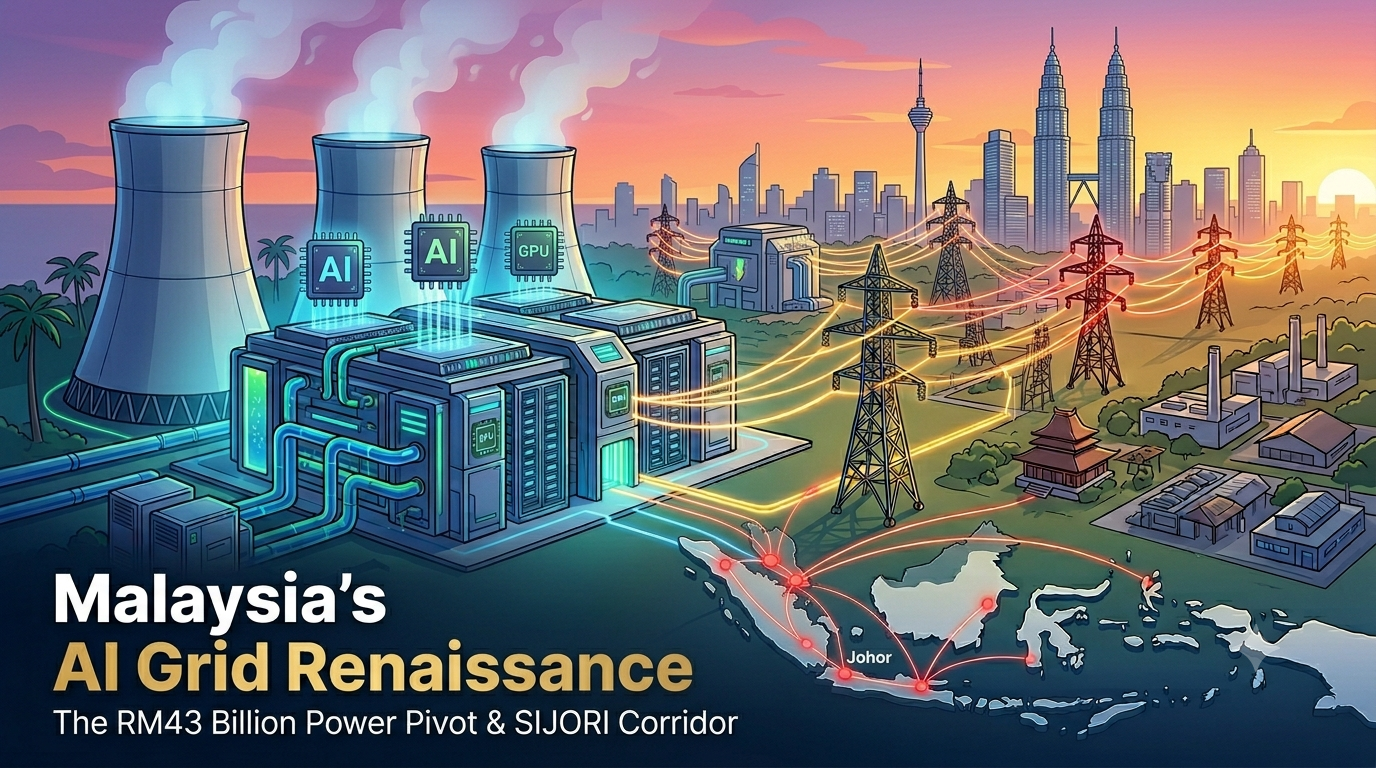
As the regional race for Artificial Intelligence sovereignty accelerates, the spotlight has shifted intensely toward the SIJORI (Singapore-Johor-Batam) growth corridor. With Singapore tightly managing its domestic land and carbon footprints, neighboring hubs have stepped up to absorb the immense compute load.
However, as explored in our deep-dive into the silent bottleneck inside Indonesia’s AI infrastructure and energy crisis, running thousands of high-density Nvidia GPU clusters requires an astronomical amount of power.
Now, Malaysia is facing its own energy wake-up call. To ensure the lights stay on for the world’s largest tech monopolies, the nation has just launched a staggering infrastructure counter-offensive.
Malaysia’s Exponential Load Growth
For macro investors tracking digital infrastructure, the raw numbers coming out of Kuala Lumpur are staggering. According to recent Q1 data from national utility giant Tenaga Nasional Berhad (TNB), data center load utilization in Malaysia reached 1.05 gigawatts (GW)—a massive 117% year-on-year surge.
This unprecedented demand pushed the national power system’s peak load to historic highs multiple times, proving that the current infrastructure is being pushed to its absolute limits.
This aggressive scaling directly underpins the macroeconomic framework outlined in our analysis on the Navigasi Ekonomi Malaysia, which projects robust structural growth. However, maintaining this upward trajectory requires heavy industrial capital. To prevent localized grid failures, TNB has committed a massive RM43 billion (approx. USD $10.8 billion) to completely rewire and modernize the national grid network.
The “Green Lane” Strategy vs. The Clean Energy Deficit
Historically, securing a high-voltage power connection for an industrial facility in Southeast Asia could take up to three years. In the fast-moving world of generative AI, that is an eternity.
To maintain its competitive edge over regional neighbors, Malaysia deployed the Green Lane Pathway, a specialized framework that successfully slashed grid connection timelines down from 36 months to just 12 months.
But clearing the administrative red tape only solves half the problem. Hyperscalers like Microsoft, Google, and Amazon operate under strict global corporate mandates: their AI workloads must be powered by clean energy. This has forced a massive structural pivot in how B2B energy is bought and sold in the region:
-
The Corporate Green Power Program (CGPP): Allowing data centers to bypass standard tariffs and secure direct renewable energy contracts.
-
Grid Upgrades for Intermittency: The RM43 billion grid upgrade isn’t just about laying thicker cables; it is specifically designed to handle the variable, intermittent nature of large-scale solar and hydro power being injected into the system.
For localized market players looking to navigate these emerging corporate requirements, utilizing specialized services can streamline deployment. For instance, developers frequently leverage freelance project managers and technical consultants via platforms like JakartaInvest on Projects.co.id to handle cross-border regulatory compliance.
Asymmetric Investment Opportunities to Watch
As capital floods the SIJORI corridor, forward-looking investors are looking past the data center operators themselves and targeting the underlying supply chain.
1. High-Density Cooling & Industrial Equipment
Traditional air conditioning cannot cool an AI data center in a tropical climate. The future belongs to liquid-to-chip cooling systems, industrial-grade heat exchangers, and advanced ventilation infrastructure. The massive demand for localized assembly and maintenance of these systems mirrors the growth patterns seen in other heavy-duty commercial sectors, such as the specialized supply chains tracked by Catering Equipment Blog, where high-uptime thermal efficiency is critical to operational survival.
2. Grid Modernization & Transformer Plays
The global lead time for high-voltage electrical transformers has skyrocketed. Companies that manufacture switchgears, substations, and smart-grid software inside ASEAN are sitting on massive, multi-year order backlogs.
The Bottom Line
The AI boom is fundamentally an energy boom. As Malaysia aggressively deploys billions to transform its grid into a hyper-efficient, green-lane network, it is setting the blueprint for how emerging markets must adapt to the physical realities of the digital age.
To stay updated on cross-border infrastructure tenders, freelance tech consulting opportunities, and regional engineering networks, consider engaging with specialized industry hubs like the Core Freelancers Google Group to track the boots-on-the-ground talent driving these massive physical builds.
For a broader look at how these macroeconomic forces are shaping capital flows across the tech sector, visit our homepage at MLB Invest News.