

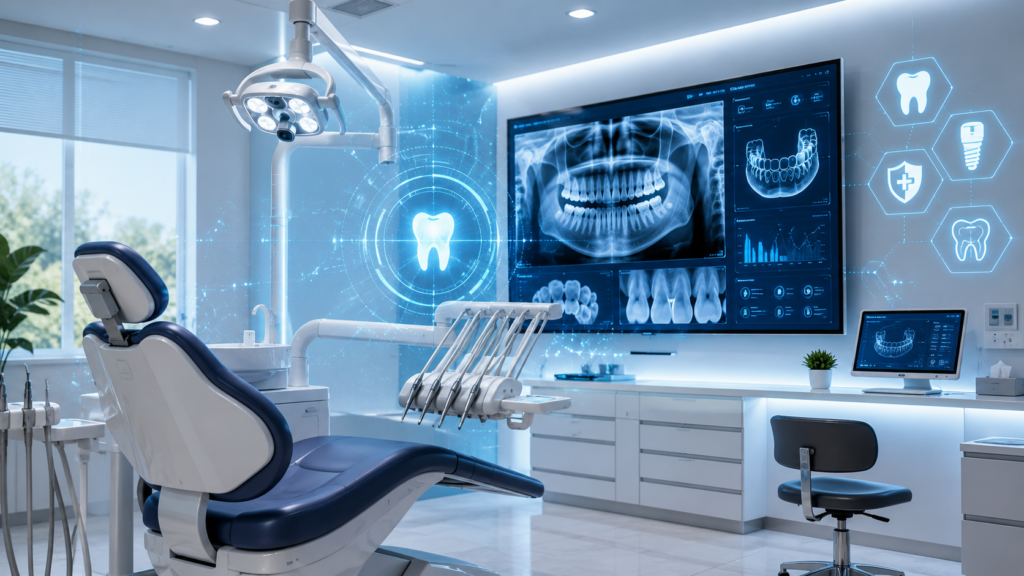
Dentistry has advanced significantly over the past decade. Modern dental clinics now combine skilled professionals with digital technologies to deliver more accurate diagnoses, efficient treatments, and better patient experiences. While clinical expertise remains the foundation of quality dental care, technology has become an important partner in supporting daily operations and improving decision-making.
Artificial intelligence is one of the innovations reshaping the healthcare sector, including dentistry. From analyzing dental images to organizing patient appointments and supporting treatment planning, AI helps clinics work more efficiently while maintaining high standards of care.
The adoption of AI in dental care is not about replacing dentists. Instead, it allows dental professionals to spend less time on repetitive administrative work and more time focusing on patient treatment. By processing data quickly and identifying useful patterns, AI provides practical support that benefits both healthcare providers and patients.
This article explores how AI is transforming modern dental clinics, the advantages it offers for patients and practitioners, and why intelligent technology is becoming an important part of the future of dentistry.
Why AI Is Becoming More Important in Dentistry
Dental clinics handle much more than clinical procedures. Every day, they manage patient records, appointment schedules, diagnostic images, treatment plans, billing, inventory, and follow-up care.
As patient numbers increase, these administrative responsibilities become more complex.
Artificial intelligence helps organize this information automatically, reducing repetitive tasks while improving workflow efficiency. Instead of manually reviewing every record or schedule, dental professionals can access organized information that supports faster and more informed decisions.
This allows clinics to deliver more responsive services without compromising the quality of patient care.
AI Supports More Accurate Diagnostics
Assisting with Dental Image Analysis
One of the most promising applications of AI in dentistry is the analysis of diagnostic images.
Dental X-rays, panoramic scans, and intraoral images contain valuable information that dentists use to evaluate oral health.
AI-powered software can assist by identifying patterns that may indicate:
- Early tooth decay
- Bone loss
- Gum disease
- Dental fractures
- Impacted teeth
- Periapical abnormalities
Rather than replacing clinical judgment, AI highlights areas that may require closer examination, allowing dentists to perform more comprehensive evaluations.
The final diagnosis and treatment decision always remain the responsibility of qualified dental professionals.
Supporting Treatment Planning
Every patient has different dental needs.
Artificial intelligence can organize patient records, previous treatments, radiographic images, and clinical notes to provide dentists with a complete overview before consultations begin.
This reduces preparation time while making it easier to develop personalized treatment plans based on each patient’s oral health condition.
Patients also benefit from clearer explanations because digital tools help visualize treatment options more effectively.
Smarter Appointment Scheduling
Managing appointment schedules efficiently is essential for every dental clinic.
Patients frequently request changes, cancellations, or emergency consultations, making manual scheduling increasingly difficult.
AI-powered scheduling systems analyze appointment duration, practitioner availability, treatment type, and historical attendance patterns to recommend the most efficient schedule.
Automatic reminders also reduce missed appointments, helping clinics improve productivity while minimizing idle treatment rooms.
Better Patient Communication
Patients often have questions before and after treatment.
Common inquiries include appointment confirmations, treatment preparation, post-treatment instructions, payment information, and follow-up schedules.
AI-powered communication systems can respond to routine questions instantly while allowing clinic staff to focus on situations that require personal attention.
Faster communication improves patient satisfaction and creates a more organized clinical experience.
Smarter Inventory Management
Dental clinics rely on a consistent supply of instruments, consumables, and medical materials.
Artificial intelligence helps monitor inventory by analyzing treatment volume, supplier delivery schedules, and historical purchasing data.
Instead of manually checking stock every day, AI predicts future inventory needs and provides purchasing recommendations before shortages occur.
This helps clinics maintain uninterrupted services while reducing unnecessary storage costs.
| Operational Area | AI Contribution |
|---|---|
| Appointment scheduling | Optimizes daily patient bookings |
| Dental imaging | Assists image interpretation |
| Patient records | Organizes clinical information |
| Inventory management | Forecasts supply requirements |
| Patient communication | Automates reminders and follow-ups |
| Clinic reporting | Generates operational insights |
Improving Operational Efficiency
Administrative efficiency directly affects patient experience.
Artificial intelligence automates routine workflows such as appointment confirmations, billing support, treatment documentation, and performance reporting.
These improvements reduce repetitive office work while allowing dentists, hygienists, and administrative teams to focus on patient-centered services.
For growing clinics, this operational efficiency supports better resource management without increasing administrative complexity.
Practical Applications for Dental Clinics
A clinic such as Klinik GDC can adopt AI gradually based on operational priorities.
The first step may involve digital appointment scheduling and electronic patient records before expanding into AI-assisted image analysis, inventory forecasting, and business reporting.
This gradual implementation allows clinics to improve efficiency without disrupting daily patient services.
As cloud-based AI solutions become increasingly accessible, intelligent clinic management is becoming practical for both large and small dental practices.
AI Supports Many Healthcare and Business Sectors
Artificial intelligence is transforming a wide range of professional services.
Healthcare providers increasingly rely on AI in healthcare to improve patient management, medical documentation, appointment scheduling, and operational efficiency across different medical specialties.
Businesses specializing in AI for service use intelligent technologies to optimize maintenance scheduling, customer communication, technician coordination, and service management through predictive analytics.
Financial departments are also embracing AI in accounting to automate bookkeeping, improve financial reporting, monitor cash flow, and support better business decision-making.
Although these industries operate in different fields, they all demonstrate how AI helps professionals reduce repetitive work while improving organizational performance.
Challenges Clinics Should Consider
Human Expertise Remains Irreplaceable
Dentistry requires clinical judgment, technical skill, and direct patient interaction.
Artificial intelligence can assist with data analysis and workflow management, but dentists remain responsible for examinations, diagnoses, treatment planning, and patient care.
Technology should strengthen professional expertise rather than replace it.
Patient Privacy Must Be Protected
Dental clinics manage confidential patient information, including health records, diagnostic images, and treatment histories.
Organizations implementing AI should maintain strong cybersecurity measures and comply with applicable healthcare privacy regulations to protect patient data.
Maintaining trust remains essential for every healthcare provider.
Training Encourages Successful Adoption
Introducing AI requires employees to understand how intelligent systems support daily clinical operations.
Providing practical training allows dental professionals to interpret AI-generated information effectively while continuing to rely on their clinical experience.
The best outcomes occur when technology and professional expertise work together.
The Future of AI in Dental Care
Artificial intelligence is expected to play an even greater role in dentistry over the coming years.
Future developments may include:
- AI-assisted diagnostic imaging
- Predictive oral health monitoring
- Personalized preventive care recommendations
- Automated treatment documentation
- Intelligent inventory forecasting
- Remote patient follow-up systems
- Advanced clinic performance analytics
Rather than changing the role of dentists, these innovations will allow healthcare professionals to dedicate more time to patient care while improving operational efficiency behind the scenes.
Conclusion
The adoption of AI in dental care is helping modern dental clinics improve diagnostics, patient communication, appointment management, inventory control, and overall operational performance. By automating administrative processes and providing valuable analytical support, AI enables dental professionals to focus on delivering safe, personalized, and high-quality treatment.
For clinics seeking sustainable growth, artificial intelligence should be viewed as a practical business tool that complements professional expertise. Dental practices that combine experienced clinicians with intelligent technology will be well positioned to meet the evolving expectations of today’s patients while maintaining high standards of care.
Frequently Asked Questions (FAQ)
1. What is AI in dental care?
AI in dental care refers to the use of artificial intelligence to assist with diagnostics, patient management, appointment scheduling, treatment planning, and clinic operations.
2. How does AI help dentists?
AI helps dentists analyze dental images, organize patient information, streamline administrative tasks, and support more efficient treatment planning while leaving all clinical decisions to qualified professionals.
3. Can AI improve patient experience in dental clinics?
Yes. AI enables faster appointment scheduling, automated reminders, improved communication, organized patient records, and more efficient clinic operations, all of which contribute to a better patient experience.
4. Is AI suitable for small dental clinics?
Yes. Many cloud-based AI platforms are scalable, allowing clinics of different sizes to adopt intelligent technologies gradually based on their operational needs.
5. Will AI replace dentists?
No. AI serves as a decision-support tool that assists with data analysis and administrative processes. Dentists remain responsible for diagnosis, treatment planning, procedures, and patient care.