
The beauty industry has always embraced innovation. From advanced laser devices to non-invasive facial treatments, aesthetic clinics continuously adopt new technologies to deliver safer procedures and more satisfying results. As client expectations become increasingly personalized, beauty clinics are also looking for smarter ways to improve consultations, manage operations, and provide treatments tailored to each individual’s skin condition.
Artificial intelligence is becoming an important part of this transformation. Rather than replacing dermatologists or aesthetic practitioners, AI helps clinics process information more efficiently, analyze skin conditions, organize patient records, and improve everyday operations. These technologies enable professionals to make better-informed decisions while allowing clients to enjoy a smoother and more personalized experience.
The growing role of AI in beauty clinic management reflects a broader trend across the healthcare industry, where intelligent systems support both clinical and administrative activities. By combining experienced practitioners with data-driven technology, beauty clinics can deliver consistent services while maintaining the personal approach that clients value.
This article discusses how artificial intelligence is influencing aesthetic clinics, particularly in skin analysis, treatment planning, patient management, and operational efficiency, while highlighting why AI is becoming an increasingly valuable business tool.
Why AI Is Becoming Important in Beauty Clinics
Running a beauty clinic involves much more than performing treatments. Every day, clinics manage consultation schedules, patient histories, treatment plans, product inventories, medical documentation, and follow-up appointments.
As the number of clients grows, these responsibilities become increasingly complex.
Artificial intelligence helps organize large amounts of operational information while reducing repetitive administrative work. Instead of spending valuable time searching through records or manually updating schedules, clinic staff can access organized information almost instantly.
This improves efficiency without reducing the importance of professional judgment.
AI Supports More Personalized Skin Analysis
Understanding Individual Skin Conditions
Every client’s skin is unique.
Factors such as age, genetics, environmental exposure, hydration, pigmentation, and lifestyle influence how skin responds to different treatments.
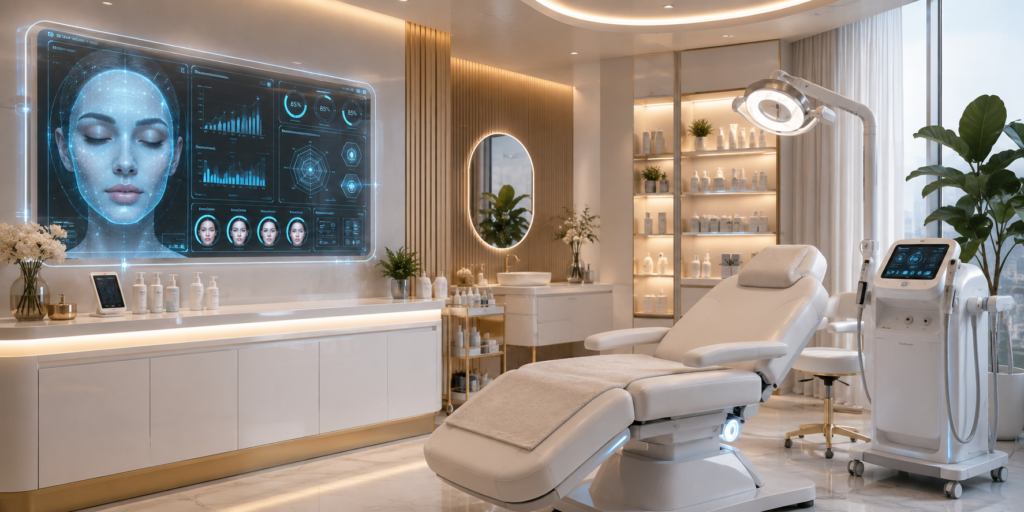
Modern AI-powered skin analysis systems can evaluate facial images and identify visible characteristics including:
- Skin texture
- Fine lines
- Wrinkles
- Pigmentation
- Acne conditions
- Pore visibility
- Skin hydration
- Sun damage indicators
These assessments provide practitioners with additional information before consultations begin.
AI does not diagnose medical conditions independently. Instead, it offers objective image analysis that supports professional evaluation.
Better Treatment Recommendations
Choosing the most suitable aesthetic treatment requires careful assessment.
Artificial intelligence helps practitioners organize patient histories, previous treatments, skin analysis reports, and recovery progress into one accessible system.
This allows practitioners to compare changes over time and recommend treatments that better align with each client’s individual needs.
The final treatment decision always remains with qualified healthcare professionals.
Improving Patient Management
Smarter Appointment Scheduling
Beauty clinics frequently manage consultations, laser treatments, facials, injectables, IV therapy, and follow-up appointments throughout the day.
Coordinating these schedules manually can become increasingly difficult.
AI-powered scheduling systems analyze appointment duration, practitioner availability, treatment room occupancy, and historical booking patterns to optimize clinic schedules.
Automatic reminders also help reduce missed appointments, improving productivity while making the experience more convenient for clients.
Personalized Client Communication
Beauty treatments often require ongoing care rather than one-time visits.
Artificial intelligence can support personalized communication by reminding clients about maintenance treatments, aftercare instructions, skincare recommendations, and future consultations.
These automated yet personalized interactions help strengthen long-term relationships while encouraging treatment consistency.
Inventory Management Becomes More Efficient
Beauty clinics rely on numerous medical-grade skincare products, injectable materials, treatment consumables, and specialized equipment.
Managing these supplies manually can increase the risk of shortages or unnecessary stock accumulation.
AI analyzes treatment volume, purchasing history, supplier performance, and seasonal demand to recommend optimal inventory levels.
Rather than reacting after supplies run low, clinics can plan purchases proactively.
| Clinic Operation | AI Contribution |
|---|---|
| Skin analysis | Assists image evaluation |
| Appointment scheduling | Optimizes consultation calendars |
| Patient records | Organizes treatment history |
| Product inventory | Predicts supply requirements |
| Client communication | Automates reminders and follow-ups |
| Business reporting | Provides operational insights |
AI Improves Business Decision-Making
Artificial intelligence offers value beyond clinical support.
Clinic owners can analyze operational performance through dashboards that summarize important business indicators.
AI can identify:
- Treatment popularity
- Client retention rates
- Seasonal booking patterns
- Product consumption
- Revenue trends
- Practitioner utilization
- Appointment cancellation patterns
These insights help management make more informed business decisions while improving long-term planning.
Practical Applications for Modern Aesthetic Clinics
A clinic such as Aeconic Aesthetic can introduce AI gradually according to operational priorities.
The first stage may include digital appointment scheduling and electronic medical records before expanding into AI-assisted skin analysis, inventory forecasting, business reporting, and personalized patient communication.
This gradual approach allows clinics to improve efficiency without disrupting daily operations.
As AI technologies become more affordable and cloud-based, intelligent clinic management is becoming increasingly accessible for aesthetic businesses of different sizes.
AI Is Supporting Innovation Across Healthcare
Artificial intelligence continues to improve operational performance across many healthcare sectors.
Medical providers increasingly rely on AI in healthcare to streamline patient management, appointment scheduling, medical documentation, and preventive care.
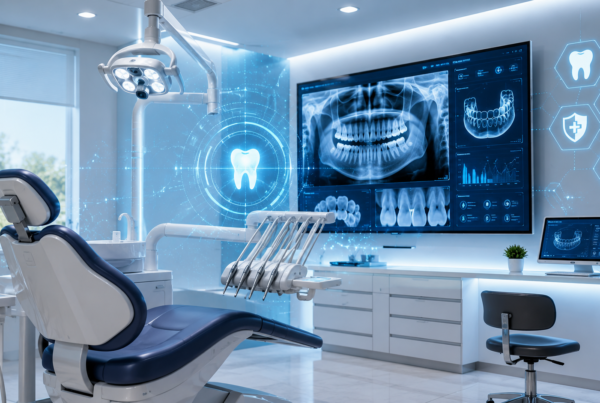
Dental professionals are also adopting AI in dental care to assist with diagnostic imaging, treatment planning, patient communication, and clinic administration.
Outside the healthcare sector, businesses implementing AI for service improve maintenance scheduling, customer support, resource management, and operational planning through predictive analytics.
Although these industries have different objectives, they all demonstrate how AI enhances efficiency while allowing professionals to focus on delivering high-quality services.
Challenges Clinics Should Consider
Professional Expertise Remains Essential
Artificial intelligence supports practitioners by organizing information and identifying useful patterns.
However, aesthetic consultations require clinical knowledge, ethical judgment, and direct interaction with clients.
Treatment recommendations should always be made by qualified professionals after conducting comprehensive assessments.
Technology should complement professional expertise rather than replace it.
Data Privacy Must Be Protected
Beauty clinics store sensitive personal information, including medical histories, treatment records, and facial images.
Organizations adopting AI should implement robust cybersecurity measures and comply with healthcare privacy regulations to protect client data.
Maintaining confidentiality remains fundamental to building long-term trust.
Staff Training Encourages Successful Adoption
Successful AI implementation depends on knowledgeable employees.
Practitioners and administrative staff should understand how AI-generated insights support daily workflows while continuing to rely on professional experience when making clinical decisions.
Technology becomes most effective when combined with skilled human expertise.
The Future of AI in Beauty Clinics
Artificial intelligence is expected to become increasingly integrated into aesthetic medicine.
Future developments may include:
- AI-assisted skin condition monitoring
- Personalized skincare recommendations
- Predictive treatment planning
- Automated consultation documentation
- Smart inventory forecasting
- Virtual skin progress tracking
- Advanced business performance analytics
Rather than changing the role of aesthetic practitioners, these technologies will strengthen their ability to provide personalized care while improving operational efficiency behind the scenes.
Conclusion
The adoption of AI in beauty clinic operations is helping aesthetic providers deliver more personalized services while improving efficiency across patient management, skin analysis, scheduling, and inventory control. Artificial intelligence provides practical support that allows practitioners to spend more time understanding client needs and developing customized treatment plans.
For modern aesthetic clinics, long-term success will continue to depend on experienced professionals who combine medical knowledge with excellent patient care. AI simply provides smarter tools that strengthen those capabilities. Clinics that embrace intelligent technology while maintaining high professional standards will be well positioned to meet the growing expectations of today’s beauty and wellness clients.
Frequently Asked Questions (FAQ)
1. What is AI in beauty clinic management?
AI in beauty clinic management refers to the use of artificial intelligence to support skin analysis, appointment scheduling, patient management, inventory control, and business operations.
2. How does AI improve skin analysis?
AI analyzes facial images to identify visible skin characteristics such as pigmentation, wrinkles, pores, hydration, and texture, providing additional information for practitioners during consultations.
3. Can AI replace aesthetic practitioners?
No. AI serves as a decision-support tool that assists with analysis and administrative processes. Treatment decisions remain the responsibility of qualified healthcare professionals.
4. Is AI suitable for small beauty clinics?
Yes. Many cloud-based AI platforms are scalable, allowing clinics of different sizes to adopt intelligent technologies according to their operational needs and budget.
5. How does AI improve the client experience?
AI helps clients enjoy faster appointment scheduling, personalized treatment recommendations, automated follow-up reminders, organized medical records, and more efficient clinic services.