

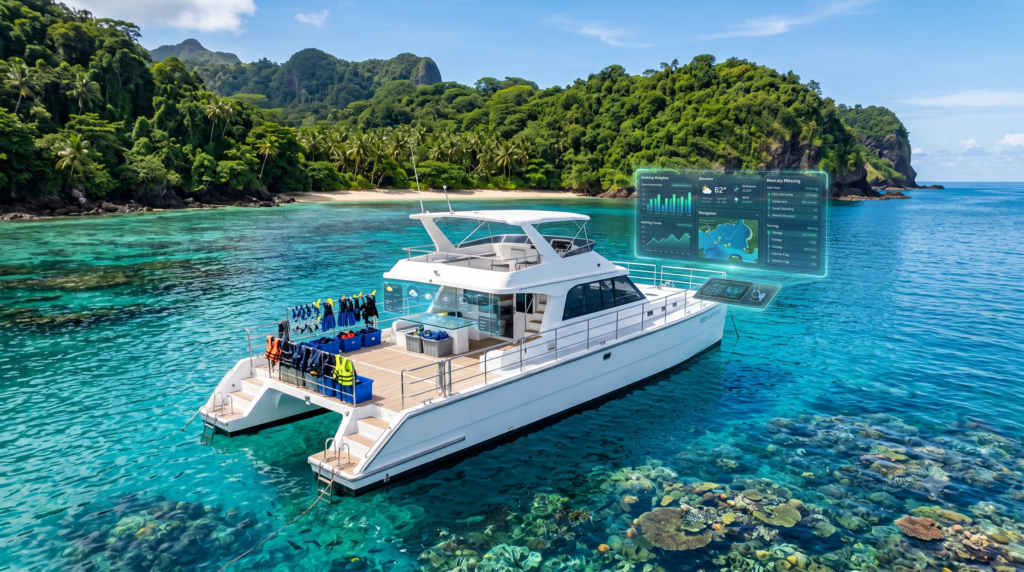
Travel has always been built around experiences. Whether someone is planning a snorkeling adventure, joining an island tour, or booking a private holiday package, travelers expect every part of the journey to be simple, enjoyable, and well organized. Today’s customers also expect fast responses, personalized recommendations, and smooth booking processes that fit their travel preferences. These changing expectations have encouraged travel businesses to adopt digital technologies that simplify daily operations while improving customer satisfaction. Among those innovations, artificial intelligence (AI) is becoming one of the most practical tools for modern tour operators. Rather than replacing travel consultants or tour guides, AI supports them by automating repetitive administrative tasks, analyzing customer preferences, and providing valuable insights that help businesses make better decisions.
For companies offering snorkeling tours, island excursions, and private travel packages, AI in travel opens new opportunities to improve operational efficiency while creating more personalized experiences for every guest. From reservation management to customer communication, AI enables businesses to spend less time on routine administration and more time delivering memorable adventures.
This article explores how AI is changing the travel industry, particularly for snorkeling and tour operators, and why businesses that embrace intelligent technology will be better prepared for the future.
Why AI Is Becoming More Important in the Travel Industry
Planning a trip involves far more than confirming a reservation. Travel businesses coordinate transportation, tour schedules, equipment availability, weather forecasts, customer inquiries, payment processing, and local partners, often all at the same time.
As booking volumes increase, manually handling these activities becomes increasingly challenging. Delayed responses, scheduling conflicts, or communication errors can negatively affect the customer experience.
Artificial intelligence helps organize operational information by processing large amounts of data quickly and accurately. Instead of searching through multiple spreadsheets or manually updating schedules, businesses gain access to centralized information that supports faster and more reliable decision-making.
For tour operators, this means smoother daily operations and more time to focus on guest satisfaction.
AI Makes Booking Management More Efficient
Smarter Reservation Systems
Booking management is one of the busiest parts of any travel business.
Customers often compare different tour packages, request schedule changes, ask about availability, or make last-minute reservations. Managing these requests manually requires constant attention.
AI-powered booking systems automatically organize reservations, monitor tour capacity, and update availability in real time.
The system can also reduce double bookings while helping businesses maximize available tour slots during peak travel seasons.
As a result, reservation management becomes faster, more organized, and less dependent on manual administration.
Faster Customer Communication
Travelers usually have many questions before confirming a booking.
They may ask about snorkeling equipment, departure times, weather conditions, transportation, cancellation policies, or recommended clothing.
AI-powered virtual assistants can answer routine questions immediately, even outside normal business hours.
This allows customer service teams to focus on more complex inquiries that require personal assistance while ensuring travelers receive timely information whenever they need it.
Personalized Travel Recommendations
Every traveler has different interests.
Some visitors prefer snorkeling and marine life exploration, while others look for cultural experiences, private tours, or photography opportunities.
Artificial intelligence analyzes customer preferences, previous bookings, travel dates, and destination interests to recommend experiences that match individual expectations.
Instead of offering identical packages to every visitor, businesses can provide personalized suggestions that increase customer satisfaction while improving booking opportunities.
This personalized approach also encourages repeat visits because travelers feel that recommendations are relevant to their interests.
Better Trip Planning Through Data Analysis
Successful tours depend on careful planning.
Artificial intelligence supports tour operators by analyzing operational information such as:
- Seasonal visitor trends
- Booking history
- Weather forecasts
- Transportation schedules
- Tour popularity
- Customer feedback
- Equipment availability
Using these insights, businesses can adjust schedules, prepare resources more efficiently, and anticipate periods of higher demand.
Planning becomes more proactive rather than reactive, helping operators maintain service quality throughout the year.
Improving Equipment and Resource Management
Snorkeling businesses rely on well-maintained equipment.
Masks, fins, life jackets, snorkels, boats, and safety gear must always be available and in good condition before every departure.
AI assists by monitoring inventory usage, maintenance schedules, and replacement requirements.
For example, the system can notify staff when certain equipment requires inspection or when inventory levels fall below recommended quantities.
This proactive management reduces the risk of operational delays while maintaining high safety standards.
| Operational Area | AI Contribution |
|---|---|
| Reservation management | Organizes bookings automatically |
| Equipment inventory | Monitors availability and maintenance |
| Customer communication | Provides instant responses to routine inquiries |
| Tour scheduling | Optimizes daily departure planning |
| Demand forecasting | Predicts seasonal booking trends |
| Business reporting | Generates operational insights |
AI Supports Better Marketing Strategies
Marketing plays a significant role in attracting travelers.
Artificial intelligence analyzes website traffic, booking behavior, customer demographics, and online interactions to identify marketing opportunities.
Instead of relying solely on broad promotional campaigns, businesses can target specific customer groups with more relevant content and travel offers.
This helps improve advertising efficiency while increasing the likelihood of booking conversions.
Practical Applications for Tour Operators
Businesses do not need to introduce every AI solution at once.
A company such as Menjangan Island Trip may begin by implementing AI-powered reservation management and automated customer communication before expanding into predictive demand forecasting, equipment monitoring, or personalized travel recommendations.
This gradual approach allows businesses to evaluate operational improvements while minimizing implementation risks.
Cloud-based AI platforms also make these technologies increasingly accessible for both small and medium-sized tour operators.
AI Benefits Other Service Industries as Well
Artificial intelligence is transforming operations across many business sectors.
Commercial service providers increasingly adopt AI for service to improve predictive maintenance, scheduling, customer communication, and resource planning through intelligent automation.
Similarly, businesses investing in AI powered laundry technologies use intelligent washing systems to improve operational efficiency, reduce utility consumption, and maintain consistent service quality.
The hospitality sector is also evolving rapidly. Discussions surrounding the future AI in hospitality highlight how hotels, resorts, and accommodation providers use artificial intelligence to personalize guest experiences, streamline operations, and improve long-term business performance.
Although these industries serve different markets, they demonstrate how AI helps organizations improve efficiency while maintaining a strong focus on customer satisfaction.
Challenges Businesses Should Consider
Human Interaction Remains Valuable
Travel is built on personal experiences.
While AI helps automate administrative work, guests still appreciate recommendations, local knowledge, and genuine hospitality provided by experienced travel professionals.
Technology should support these interactions rather than replace them.
Data Privacy Must Be Protected
Travel businesses collect customer information such as booking details, payment records, and travel preferences.
Organizations implementing AI should maintain strong cybersecurity measures and follow data privacy regulations to protect customer information.
Maintaining trust remains essential in the travel industry.
Staff Training Supports Successful Adoption
Employees should understand how AI systems work and how they support daily operations.
Providing training allows staff to use AI-generated insights effectively while continuing to deliver personalized service that technology alone cannot provide.
The Future of AI in Travel
Artificial intelligence will continue reshaping the travel industry over the coming years. Future developments may include:
- Predictive travel demand forecasting
- AI-assisted itinerary planning
- Smart pricing recommendations
- Automated multilingual customer support
- Real-time weather-based tour adjustments
- Intelligent equipment maintenance scheduling
- Personalized travel experiences based on customer preferences
Rather than replacing tour operators, these innovations will simplify operational management while allowing businesses to focus on creating memorable experiences for travelers.
Conclusion
The adoption of AI in travel is helping tour operators improve reservation management, customer communication, equipment planning, and operational efficiency. For businesses specializing in snorkeling adventures and island tours, artificial intelligence provides practical tools that support better organization while enhancing the overall travel experience.
Technology alone cannot create unforgettable journeys. The expertise of experienced guides, local knowledge, and genuine hospitality remain at the heart of successful tourism businesses. AI simply provides the support needed to deliver those experiences more efficiently and consistently. Companies that combine professional service with intelligent technology will be better positioned to meet the expectations of modern travelers.
Frequently Asked Questions (FAQ)
1. What is AI in travel?
AI in travel refers to the use of artificial intelligence to improve booking management, customer service, itinerary planning, marketing, and operational efficiency for travel businesses.
2. How can AI benefit snorkeling and tour operators?
AI helps organize reservations, manage equipment, predict customer demand, automate communication, and personalize travel recommendations.
3. Can AI improve customer satisfaction?
Yes. AI enables faster responses, more accurate booking management, personalized travel suggestions, and smoother operational processes that improve the overall customer experience.
4. Is AI suitable for small travel businesses?
Yes. Many cloud-based AI platforms are scalable, making them accessible to both small and large tour operators.
5. Will AI replace travel consultants or tour guides?
No. AI supports administrative and operational tasks, while experienced travel professionals continue providing local expertise, personal recommendations, and memorable guest experiences.