

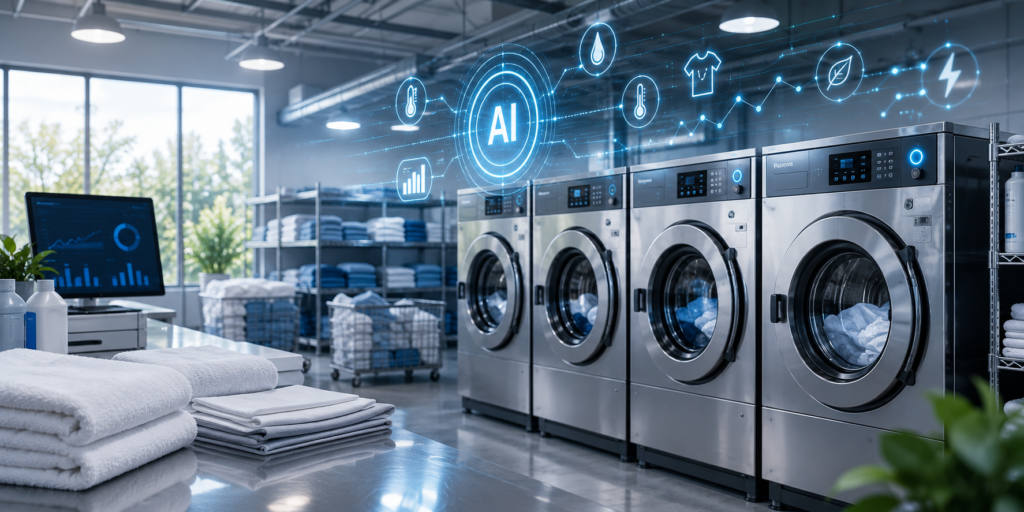
The laundry industry has evolved far beyond simple wash-and-fold services. Today, customers expect fast turnaround times, consistent cleaning quality, careful garment handling, and environmentally responsible operations. Whether serving hotels, restaurants, healthcare facilities, or individual customers, laundry businesses must balance productivity with service quality while keeping operating costs under control.
To meet these growing expectations, many businesses are investing in smarter equipment. One of the most significant developments is the introduction of AI-powered washing machines. Among the leading manufacturers, LG has introduced artificial intelligence technology that automatically recognizes fabric characteristics and adjusts washing settings to improve cleaning performance while protecting garments.
An AI powered laundry system does more than automate washing cycles. It helps laundry businesses improve operational efficiency, reduce water and electricity consumption, extend equipment lifespan, and deliver more consistent service. Rather than replacing experienced laundry staff, AI provides intelligent support that enables better decisions throughout daily operations.
This article explores how LG AI washing machines are reshaping commercial laundry services, why artificial intelligence is becoming increasingly valuable for laundry businesses, and what opportunities this technology creates for the future.
Why AI Matters in the Laundry Industry
Laundry businesses process dozens or even hundreds of loads every day. Each load may contain different fabric types, levels of dirt, moisture conditions, and washing requirements.
Selecting inappropriate wash settings can lead to unnecessary fabric wear, excessive water consumption, longer drying times, or inconsistent cleaning results.
Artificial intelligence addresses these challenges by analyzing load characteristics before the washing cycle begins. Instead of relying entirely on manual program selection, AI determines the most suitable wash pattern based on the clothing inside the machine.
This approach improves efficiency while helping businesses maintain consistent service quality.
How LG AI Washing Machines Work
Intelligent Fabric Detection
One of the key advantages of LG AI washing machines is their ability to recognize different fabric conditions automatically. Using built-in sensors, the machine evaluates factors such as:
- Fabric softness
- Load weight
- Moisture levels
- Washing resistance
- Material characteristics
After analyzing these variables, the system selects the most appropriate washing motion and cycle. Rather than applying identical settings to every load, the machine adapts its operation to suit the garments being washed. This reduces unnecessary mechanical stress while improving cleaning performance.
Optimized Washing Cycles
Traditional washing machines depend heavily on manual program selection. In busy commercial laundry operations, employees may unintentionally choose less suitable settings, especially during peak operating hours. AI reduces this possibility by optimizing washing parameters automatically. The system adjusts:
- Water usage
- Wash duration
- Drum movement
- Spin speed
- Water temperature
- Rinse cycles
This intelligent optimization improves cleaning consistency while reducing resource consumption.
Improving Business Efficiency
Operational efficiency plays a major role in the profitability of commercial laundry businesses. Every additional minute spent washing or drying garments affects productivity throughout the day.
AI-powered machines help improve workflow by shortening unnecessary washing time while maintaining cleaning quality. Laundry operators can process more orders without increasing labor requirements or purchasing additional equipment. For businesses experiencing high daily volumes, these improvements contribute to faster customer turnaround.
Better Fabric Protection
Customer satisfaction depends not only on cleanliness but also on garment condition. Excessive washing intensity can damage delicate fabrics, fade colors, or reduce garment lifespan. AI technology minimizes these risks by selecting washing motions appropriate for each load. As a result, clothing receives more consistent care while maintaining fabric quality over repeated wash cycles. Businesses handling premium garments, uniforms, hotel linens, or specialty fabrics benefit significantly from this level of precision.
Energy and Water Savings
Utility costs remain one of the largest operational expenses for commercial laundries. Water, electricity, and detergent consumption directly influence business profitability. AI helps reduce unnecessary resource usage by adjusting washing settings according to actual load conditions rather than fixed programs. Potential benefits include:
| Operational Area | AI Contribution |
|---|---|
| Water consumption | Uses water based on load requirements |
| Electricity usage | Optimizes energy consumption during washing |
| Washing duration | Eliminates unnecessary cycle time |
| Detergent efficiency | Supports more effective detergent use |
| Equipment lifespan | Reduces excessive mechanical wear |
| Maintenance planning | Helps monitor machine performance |
These improvements contribute to lower operating costs while supporting environmentally responsible business practices.
Smarter Equipment Maintenance
Commercial washing machines operate continuously, making preventive maintenance essential. Unexpected equipment failures can delay customer orders and reduce business productivity. AI-assisted monitoring helps operators detect changes in machine performance before major failures occur. For example, the system may identify:
- Unusual motor performance
- Excessive vibration
- Water flow irregularities
- Drainage issues
- Component wear
- Abnormal operating patterns
Early detection allows maintenance teams to schedule repairs before equipment experiences significant downtime.
Practical Applications for Laundry Businesses
Businesses can introduce AI gradually rather than replacing every machine immediately. A company such as Bali Express Laundry may begin by installing LG AI washing machines for premium service packages before expanding AI technology across the entire operation. This gradual implementation allows management to evaluate operational improvements while minimizing investment risks. As AI-enabled equipment becomes more widely available, businesses of different sizes can benefit from intelligent washing technology.
AI Creates Opportunities Across Different Industries
Artificial intelligence is improving operations across many service sectors beyond commercial laundry. Accounting firms increasingly rely on AI in accounting to automate bookkeeping, process financial records, improve reporting accuracy, and support business decision-making.
Similarly, hotels continue embracing AI in hospitality through intelligent room management, personalized guest services, predictive maintenance, and automated customer support.
Industry experts also continue discussing the future AI in hospitality, where artificial intelligence is expected to improve operational efficiency while creating more personalized guest experiences across hotels, resorts, and accommodation providers. Although these industries serve different markets, they demonstrate the same principle: AI works best as a tool that supports professionals rather than replacing them.
Challenges Businesses Should Consider
Staff Training Remains Important
Even intelligent washing machines require knowledgeable operators. Employees should understand how AI functions, how to interpret system recommendations, and when manual adjustments remain necessary. Combining technology with practical experience produces the best results.
Initial Investment
AI-powered commercial washing machines generally require higher initial investment than conventional equipment. Businesses should evaluate long-term savings in energy consumption, maintenance, and operational efficiency when considering return on investment. For many commercial laundries, these long-term benefits outweigh the upfront cost.
Data and Connectivity
Some AI features rely on connected digital systems for monitoring, diagnostics, and maintenance updates. Businesses should ensure reliable network infrastructure and follow good cybersecurity practices to protect operational data.
The Future of AI Powered Laundry
Artificial intelligence will continue changing the laundry industry as technology becomes more advanced. Future developments may include:
- Predictive maintenance with remote diagnostics
- Automated detergent optimization
- Smart energy management
- AI-assisted workload balancing
- Real-time machine performance monitoring
- Integrated business analytics
- Remote fleet management for multiple laundry locations
Rather than changing the purpose of laundry businesses, these innovations will help operators improve efficiency, reduce operating costs, and deliver more consistent service quality.
Conclusion
The adoption of AI powered laundry technology is helping commercial laundries operate more efficiently while maintaining excellent garment care. Through intelligent fabric recognition, optimized washing cycles, predictive maintenance, and improved energy management, LG AI washing machines provide practical advantages that support both business performance and customer satisfaction.
For commercial laundry providers, AI should be viewed as a valuable operational partner rather than a replacement for experienced employees. Businesses that combine skilled staff with intelligent equipment will be better positioned to meet growing customer expectations while improving long-term operational efficiency.
Frequently Asked Questions (FAQ)
1. What is AI powered laundry?
AI powered laundry refers to the use of artificial intelligence in washing machines to automatically detect fabric characteristics, optimize wash settings, and improve cleaning efficiency.
2. How do LG AI washing machines work?
LG AI washing machines use sensors to analyze fabric type, load weight, and washing conditions before automatically selecting the most appropriate washing cycle.
3. Can AI reduce operating costs for laundry businesses?
Yes. AI helps reduce water usage, electricity consumption, maintenance costs, and unnecessary washing time while improving operational efficiency.
4. Is AI suitable for small laundry businesses?
Yes. Small businesses can gradually adopt AI-powered machines and benefit from improved productivity, fabric protection, and lower utility costs.
5. Does AI replace laundry staff?
No. AI supports laundry employees by optimizing machine performance and automating routine processes, while experienced staff remain responsible for quality control and customer service.