
Running a commercial kitchen is one of the most high-pressure jobs in the world. Walk into any major restaurant or hotel prep area during the dinner rush, and you will find a chaotic blend of extreme heat, loud noises, and dozens of people trying to coordinate complex meals at lightning speed. For decades, surviving this environment relied entirely on the experience of the head chef and the sheer physical endurance of the staff. However, the tools they use are finally getting a much-needed upgrade. The introduction of AI in hospitality is changing the hardware of the kitchen itself.
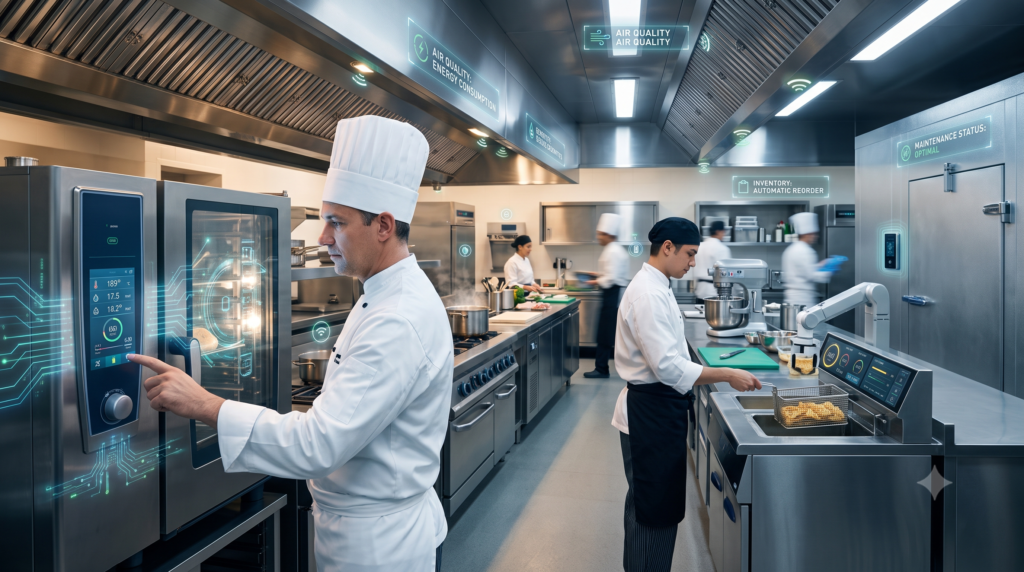
We are no longer just talking about better knives or stronger stainless steel tables. Today’s catering equipment is essentially becoming a network of smart computers. From walk-in freezers that monitor their own health to automated fryers that know exactly when the oil needs changing, software is taking over the heavy lifting. This allows chefs to step back from micromanaging the machines and focus on what they actually do best: creating great food and building a memorable menu for their guests.
Upgrading Traditional Kitchen Supplies
When we think of commercial kitchen supplies, we usually picture heavy, analog machinery. Industrial mixers, massive stovetops, and deep fryers have looked and functioned the same way for over fifty years. The modern upgrade does not change the physical appearance of these machines too much, but it completely rewrites how they operate on the inside.
Smart Ovens and Automated Cooking Stations
Imagine a combi-oven that actually watches the food as it cooks. Modern smart ovens are now equipped with internal cameras and heat sensors connected to machine learning software. Instead of a chef manually setting a timer and constantly opening the door to check if a batch of bread is browning correctly, the oven does the monitoring. It can identify the type of food placed inside, adjust the humidity levels in real-time, and automatically drop the temperature the second the food reaches the perfect internal temperature.
This level of precision is incredibly valuable for large-scale catering operations. When a kitchen needs to prepare a thousand chicken breasts for a wedding banquet, human error is almost guaranteed. A distracted cook might leave a tray in the oven for two minutes too long, ruining dozens of meals and wasting expensive ingredients. Smart cooking stations eliminate this risk entirely. They ensure that the first plate served tastes exactly the same as the five-hundredth plate, keeping quality perfectly consistent regardless of how busy the kitchen gets.
Predictive Maintenance for Heavy Catering Equipment
In the restaurant business, a broken piece of equipment is an absolute disaster. If the main walk-in refrigerator suddenly stops working on a Friday night, the kitchen does not just lose the machine; they lose thousands of dollars in spoiled meat, dairy, and fresh produce.
Fixing Machines Before They Break Down
This is where AI in hospitality offers the most immediate financial return. New commercial refrigerators, dishwashers, and ventilation hoods come with built-in diagnostic sensors. These sensors constantly monitor the vibration of the motors, the electricity draw, and the internal temperatures. If a fan belt starts to wear out, or if a condenser coil gets too dusty and begins working harder than usual, the software immediately sends an alert to the facility manager’s phone.
Instead of waiting for the fridge to completely die in the middle of a busy weekend, the management can call a repair technician on a slow Tuesday morning to replace the single worn-out part. This kind of predictive tracking is not entirely new; if you look at how AI changes construction sector logistics, you will see identical software predicting when heavy steel manufacturing equipment might fail. By applying this exact same logic to catering equipment, restaurants can completely avoid surprise breakdowns, saving massive amounts of money on emergency repairs and preventing unnecessary food spoilage. Major suppliers and networks like DC Hospitality are already seeing the benefits of equipping their clients with these smart tools, as it drastically reduces equipment downtime across their properties.
Connecting Kitchens to Broader Business Systems
A kitchen does not operate in a vacuum. The amount of food a restaurant needs to prep depends entirely on how many customers are walking through the front door. Historically, predicting this was a guessing game based on last year’s sales records. Now, AI in hospitality allows smart kitchen equipment can talk directly to the front-of-house software.
Managing Inventory and Reacting to Live Data
Modern inventory management systems use the data from smart appliances to track exactly how much food is being used every single hour. But it gets much smarter when connected to external sales data. For example, if a partner hotel experiences a sudden influx of guests booking rooms through an AI for online agent ticket platform, the kitchen’s inventory software automatically detects this spike in upcoming occupancy. The system will instantly alert the head chef to order more breakfast supplies for the following week, ensuring the kitchen is never caught off guard by a sudden rush of tourists.
Furthermore, having this highly efficient, data-driven operation opens up new promotional angles. Restaurants can even leverage AI for digital marketing to showcase their high-tech, zero-waste kitchen initiatives to eco-conscious diners. When a business can prove that their smart equipment tracks and prevents food waste down to the exact gram, it creates a powerful story that attracts environmentally friendly customers.
Traditional Equipment vs. Smart Kitchen Technology
To clearly see how much catering supplies have evolved, here is a comparison of standard commercial kitchen tools versus their modern, software-assisted counterparts.
| Equipment / Process | Traditional Kitchen Approach | Smart Kitchen Approach |
| Ovens & Grills | Manual timers and constant visual checking by staff | Automated temperature control with food-recognition cameras |
| Refrigeration | Waiting for the machine to break down completely | Predictive alerts that notify staff of failing parts early |
| Inventory Tracking | Hand-counting boxes in the freezer with a clipboard | Automated weight sensors and live usage tracking |
| Energy Consumption | Machines left running on high power all day | Systems that automatically power down during slow hours |
| Quality Control | Highly dependent on the individual cook’s focus | Perfectly consistent results guided by software |
Frequently Asked Questions (FAQ)
1. What exactly does AI in hospitality mean for a normal restaurant?
It means bringing smart software into daily operations to make things easier. For a restaurant, this looks like ovens that know how to cook specific foods perfectly without human intervention, or inventory systems that automatically order more tomatoes when the stock gets low.
2. Are smart commercial ovens difficult for kitchen staff to use?
No, they are actually designed to be much easier than older equipment. Most smart catering tools feature simple touchscreen interfaces with pictures. A new cook can simply press a picture of a steak, and the machine will automatically set the correct humidity, heat, and time, requiring zero technical training.
3. Does smart kitchen equipment save electricity?
Yes, significantly. Traditional commercial burners and fryers are often left on maximum heat all day just in case an order comes in. Smart equipment can sense when it is not being used and will automatically drop into a low-power energy-saving mode, only heating back up when a new ticket is printed.
4. Will AI in hospitality replace human chefs?
Not at all. A computer cannot taste food, invent new flavor combinations, or design a creative menu. The technology is simply there to take over the boring, repetitive tasks—like watching a timer or checking the fridge temperature—so that human chefs can focus entirely on cooking and creativity.
5. Is the initial cost of smart catering equipment worth it for a small business?
While the upfront cost of a smart oven or refrigerator is higher than a standard model, it pays for itself very quickly. By completely eliminating burned food, drastically reducing electricity bills, and preventing total machine failures, small businesses usually recover their investment within the first few years of use.